Committed to Care
Cardiology services
ECG Holter monitoring
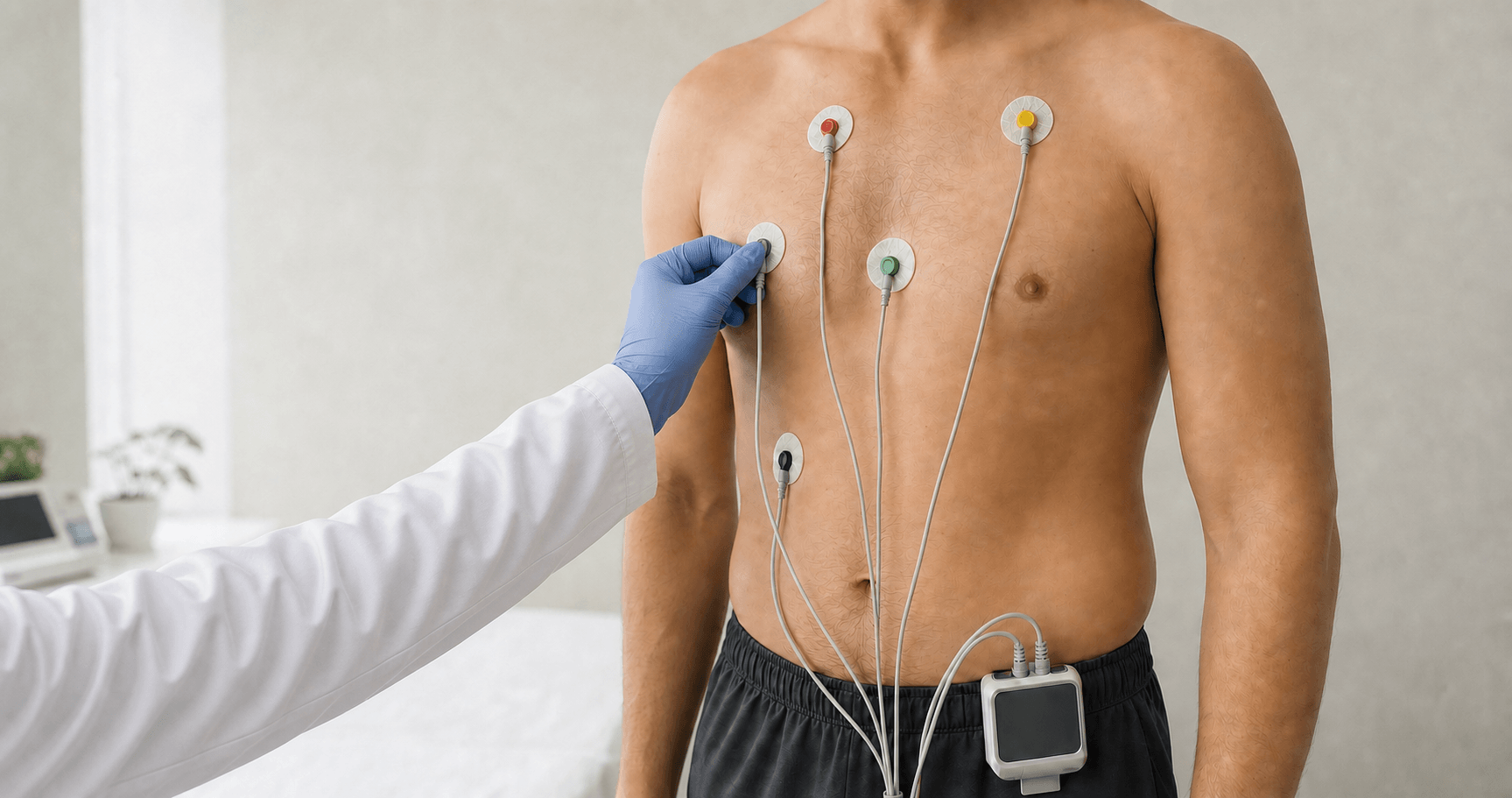
A small portable device records the heart rate in everyday life, so that episodes that do not show up on the simple cardiogram can be identified.
At a glance
PurposeFor recording heart rate in everyday life and correlating symptoms, such as palpitations, extra heartbeats, dizziness or a fainting episode, with the actual heart rate.
DurationUsually 24–48 hours or longer when clinically indicated.
PreparationNot particularly. The device is placed in the doctor's office and specific instructions are given for the recording period.
Returning to daily activitiesYou continue most daily activities, according to the instructions you will be given.
When results are availableAfter you return the device and the recording has been analysed.
During recording it is useful to note the time a symptom occurs so that it can be correlated with the heart rate at that time.
Electrocardiogram in everyday life
When the symptom comes and goes, the recording continues.
An ECG Holter monitor continuously records the heart's electrical activity for 24–48 hours or longer, depending on the indication.
Unlike the brief resting cardiogram, it monitors the rhythm during work, movement, rest and sleep. The symptom diary helps correlate what you felt with what was recorded.
Rhythm
Continuous image of heart rate and electrical activity.
Episodes
Look for pauses, tachycardia, bradycardia, or extra heartbeats.
Correlation
Linking the time of a symptom to the corresponding record.
The process
Small device. Full day of data.
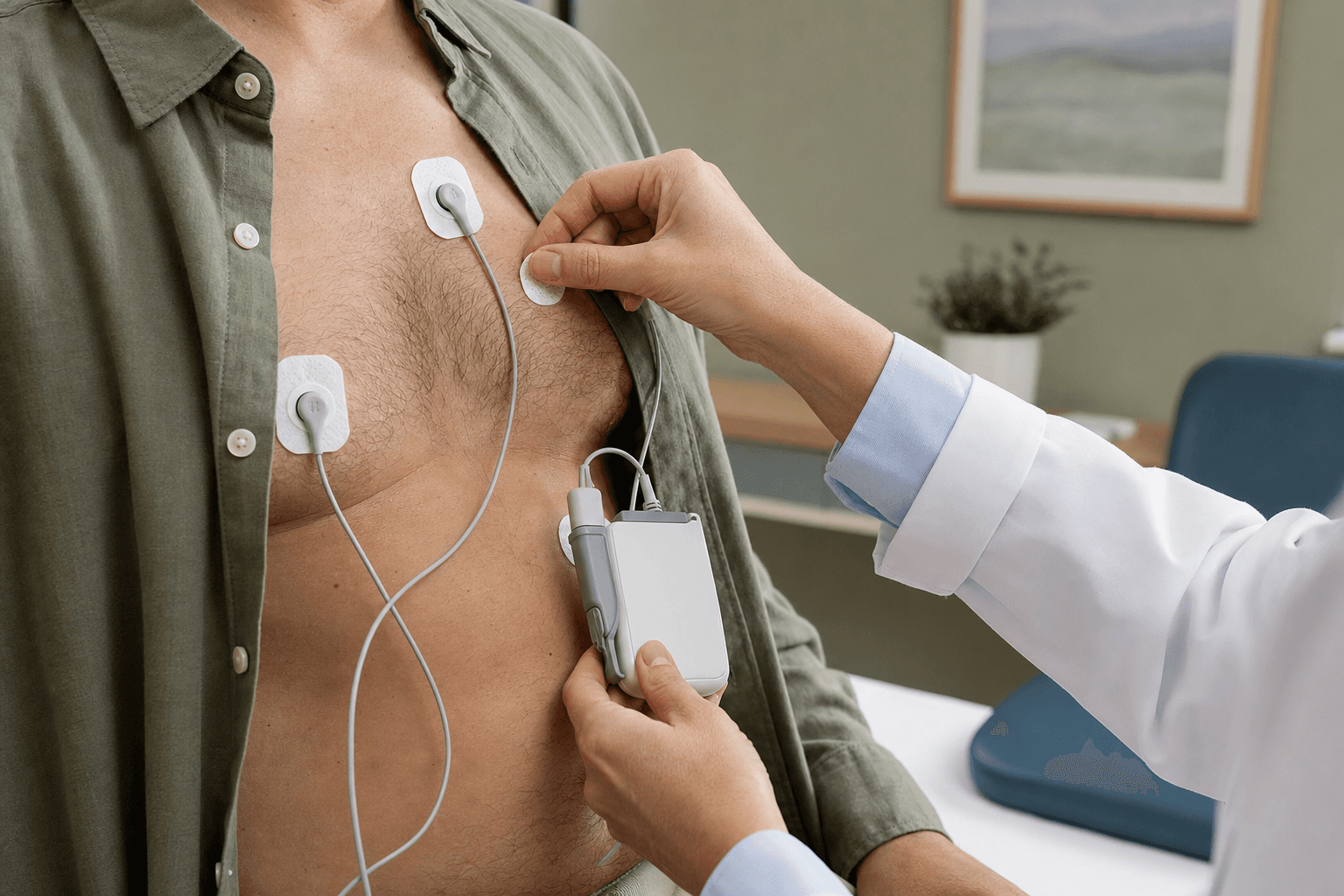
The placement is painless and the device is discreetly worn. The goal is to get on with your normal day as much as possible.
 Continuous recording of 24–48 hours
01
Placement of electrodes
Small adhesive electrodes are attached to the portable recorder and the quality of the signal is checked.
02
Daily activities and symptom diary
You note time, activity and symptoms, following the instructions for the device.
03
Recording analysis
Upon return, the full recording is analyzed and correlated with your notes.
From a snapshot to continuous monitoring
An ECG records a moment. A Holter records the heart over time.
A normal recording of a few seconds does not rule out an intermittent episode. A Holter is chosen when the duration and frequency of symptoms make it likely that something useful will be recorded.
When can it help?
For symptoms or rhythms that do not wait for an appointment.
Palpitations
Fluttering, “thumping” or feeling of a fast and irregular rhythm.
Dizziness or fainting
When a possible association with a rhythm disorder needs to be investigated.
Treatment review
To assess rhythm after treatment or intervention, when indicated.
Night episodes
For events that occur during sleep or at specific times.
Before, during, after
Good logging starts before the device is worn.
Before
Bathe before fitting, wear comfortable clothes and report any allergy to stickers.
While recording
Keep the device dry, do not remove the electrodes, and accurately record symptoms and activities.
After
Return the device and calendar at the agreed time so that the analysis can begin.
Frequently asked questions
Practical answers before your examination.
01
Can I continue my daily activities?
Usually yes, and this is useful for the exam. But follow the instructions for water, strong electromagnetic fields and any restrictions regarding the specific device.
02
What should I write in the diary?
The exact time, the symptom, the activity you did and, where relevant, the medication you took. Thus a proper correlation with the record can be made.
03
If I don't feel anything, is the test useless?
Not necessarily. Recording can show asymptomatic changes or confirm rhythm behavior in everyday life. The interpretation depends on the original question.
The right test for the right question
Do you need this exam?
The indication and preparation are determined individually by the cardiologist.
Helpful answers
What you need to know.
01
When is it needed?
In palpitations, fluttering, extra heartbeats, episodes of tachycardia, dizziness or fainting episodes.
02
What information does it give us?
It records the rhythm in everyday life and can detect intermittent arrhythmias that do not appear on the simple ECG.