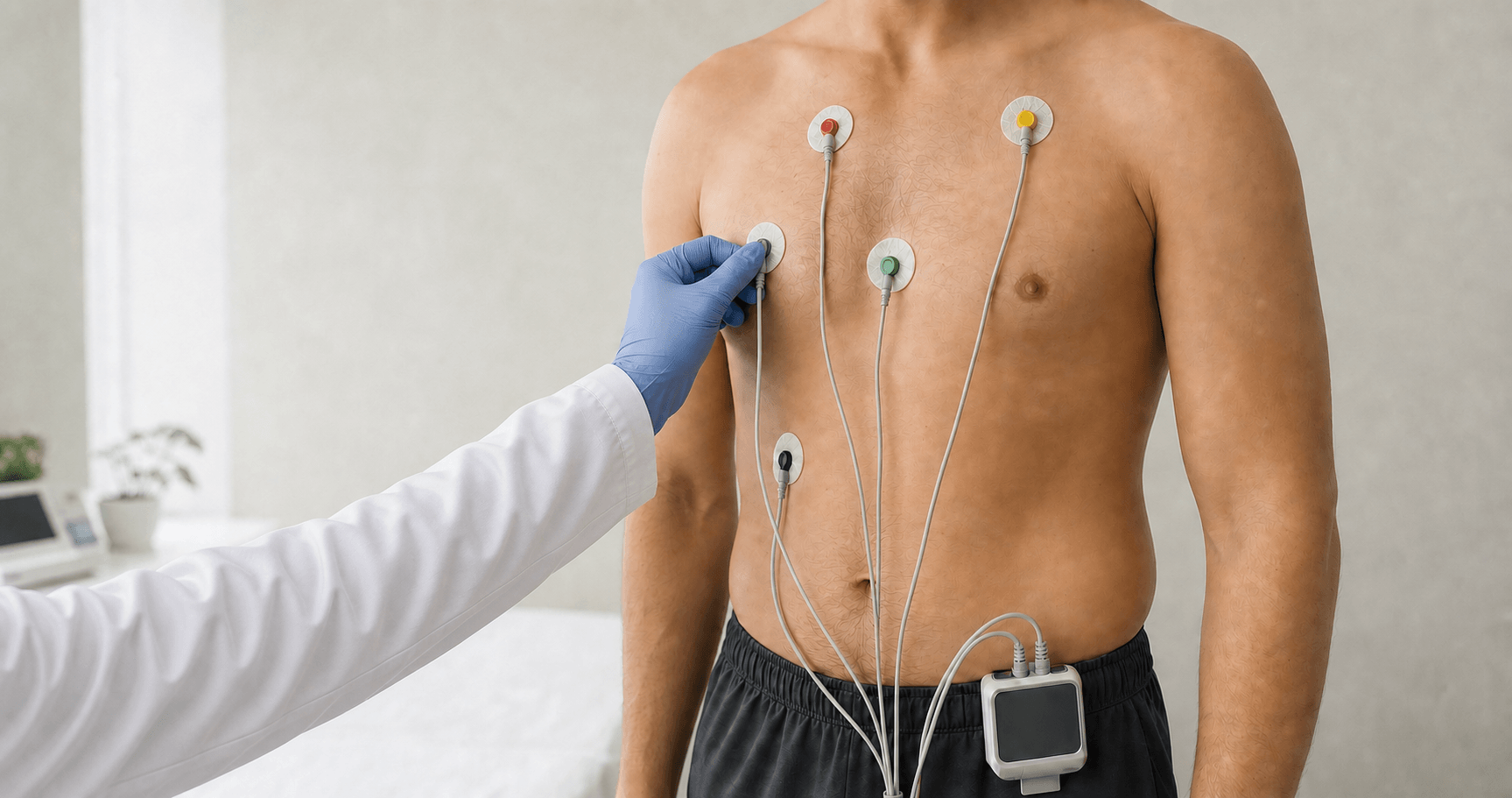
A simple electrocardiogram records a few seconds. A Holter monitors the heart's electrical activity for 24–48 hours or longer to look for intermittent episodes. However, it does not predict the future and does not rule out every arrhythmia when the symptom did not occur during the recording period.
At a glance
The main points
- Continuously records the heart rate in everyday life.
- The symptom diary helps to correlate the discomfort with the recording.
- The appropriate duration depends on how often the episode occurs.
- A normal Holter does not rule out an episode that did not occur while it was being worn.
How the exam works
Small electrodes are placed on the chest and connected to a portable device. The recording continues while the examinee follows, as much as possible, his usual day. The file is then analyzed and interpreted by a doctor.
The examination is painless. Mild irritation may occur from the stickers, and the device and electrodes should be protected according to the instructions given during placement.
When can it be useful?
Holter is chosen when a symptom is suspected to be related to a transient change in rhythm or when the frequency of a known arrhythmia needs to be estimated. The history determines whether a particular test is appropriate.
- Palpitations, "fluttering" or interruptions in rhythm.
- Episodes of tachycardia or abnormally slow heartbeats.
- Dizziness or fainting episode when arrhythmia is suspected.
- Quantification of extra heartbeats or monitoring of a known arrhythmia.
- Assessing the response to treatment in selected cases.
Why the calendar is so important
Note the exact time of the symptom, what you felt, how long it lasted, and what you did. Comparing the time with the recording shows whether an arrhythmia, normal tachycardia, or normal rhythm was present at that time.
Also record sleep, exercise, medication and unusual events. Do not intentionally change your routine to "test" the heart, unless specifically instructed.
What can the result show?
The report describes, among other things, the base rate, pulse width, spontaneous supraventricular or ventricular contractions, episodes of tachycardia, bradycardia or pauses. Numbers are not interpreted in isolation: symptoms, duration, morphology and presence of heart disease matter.
A finding that sounds impressive is not necessarily dangerous, while a relatively small burden may have a different meaning in a specific clinical context.
The limits of 24-hour or 48-hour recording
If the symptom occurs once a month, a 24-hour Holter is less likely to pick it up. Then a longer recording or a different type of device can be selected. The decision depends on the frequency and severity of the episode.
The Holter does not directly show the structure of the heart nor does it replace the echocardiogram, clinical examination or other testing that may be required.
What comes next?
The result is interpreted alongside your medical history and other tests. You may need no treatment, follow-up, a change in medication or further tests. Decisions should not be based solely on a number automatically generated in the report.
When not to wait
Immediate medical attention
Palpitations that persist and are accompanied by chest pain, severe shortness of breath, fainting, or severe weakness require immediate evaluation. Holter is not an emergency service and is not monitored live from the doctor's office.
Sources & further reading
The article provides general information and is not a substitute for an individualized medical evaluation.