Committed to Care

Cardiology services
Cardisiography (CSG)
A brief, non-invasive recording of cardiac signals used as an adjunctive tool within the overall cardiac evaluation.
At a glance
PurposeAs a supplemental recording and analysis of cardiac signals that can add information to the overall cardiac evaluation.
DurationA few minutes to register.
PreparationNot particularly.
Returning to daily activitiesImmediately.
When results are availableAfter completing the registration and medical evaluation of the results.
Cardisiography is a complementary tool and is not used in isolation to diagnose cardiovascular disease. It does not replace ECG, ultrasound, stress testing, CT or coronary angiography when these are clinically indicated.
Another perspective on the heart
Complementary analysis of cardiac signals.
A brief, non-invasive recording of cardiac signals used as an adjunctive tool within the overall cardiac evaluation.
The data is processed by algorithmic analysis and is always interpreted in conjunction with the history, clinical examination and other tests when indicated.
Electrical and analytical data
Additional information included in the cardiological assessment.
3D rendering
Visual presentation of the parameters resulting from the recording.
Medical interpretation
Results are not evaluated in isolation.
Important: Cardisiography does not replace electrocardiography, ultrasound, exercise stress testing, CT angiography, or coronary angiography when clinically indicated.
The process
Simple registration. Immediate medical evaluation.
The examination is short and non-invasive. It does not require exercise or a stay in the doctor's office after its completion.
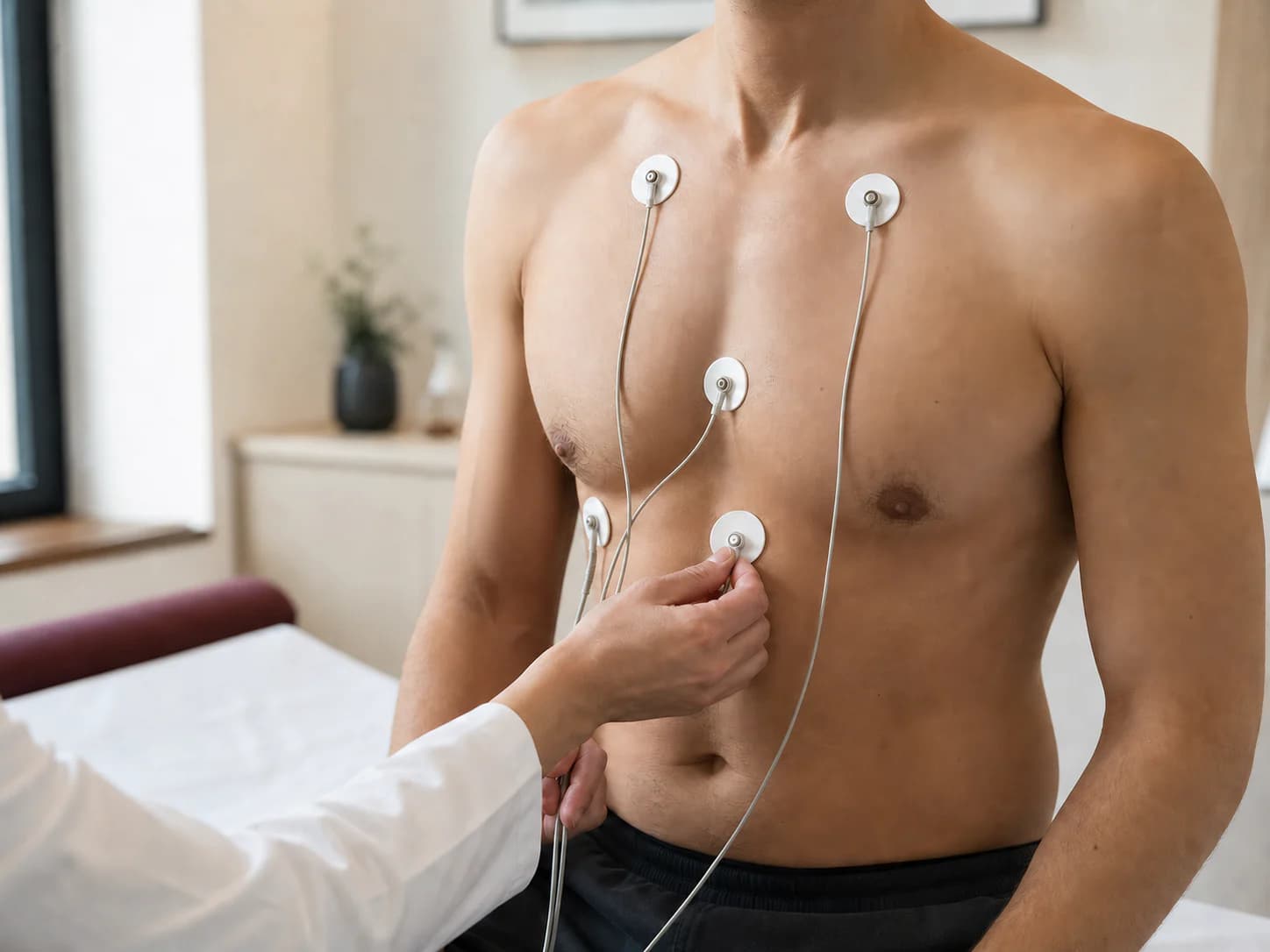 Minute recording
01
Placement of 5 electrodes
Electrodes are placed on the body for a brief recording of heart signals.
02
3D analysis
Parameters are processed and visualized with the support of AI algorithms.
03
Medical assessment
The results are interpreted by the cardiologist and are included in the overall clinical picture.
Technology with a clinical context
Artificial intelligence supports. The doctor decides.
Data analysis acts as a complementary tool. It is not a substitute for a clinical examination nor does it constitute a definitive diagnosis by itself.
Who is it addressed to?
It is used only when it can add information to a specific clinical question.
Personalized indication
Its use is decided by the cardiologist after evaluating the history.
Clinical context
Risk factors and symptoms are assessed together, not in isolation.
Complementary use
It is not used as a stand-alone test to rule out cardiovascular disease.
Specific question
Only selected when logging can add useful information.
Ask the doctor
Is this test right for you?
The indication is determined individually, based on the history and the purpose of the check.
Helpful answers
What you need to know.
01
When is it needed?
In selected clinical questions and only when the cardiologist judges that the recording can add useful information.
02
What information does it give us?
It adds an additional data recording, which is always evaluated by the cardiologist together with the overall clinical picture.